- Year-long outdoor exhibition Henry Moore and more evolves through the seasons at Kew Wakehurst in Sussex
- Four Moore bronzes sit alongside two contemporary world-premiere commissions and one UK premiere from artists Rana Begum, Rafael Pérez Evans and Paloma Varga Weisz
- Autumn brings a new backdrop to the exhibition, with shifting light, weather and foliage continually reframing the sculptures in this unique outdoor gallery
- Henry Moore and more runs until 23 May 2027 and is included in garden entry
- Presented in partnership with the Henry Moore Foundation
At Kew Wakehurst, Henry Moore and more is entering a new season.
As autumn approaches, changing foliage, atmospheric light and shifting weather patterns are transforming the setting for the year-long outdoor exhibition, offering visitors a fresh perspective on works by Henry Moore and contemporary artists Rana Begum, Rafael Pérez Evans and Paloma Varga Weisz.
The decision to showcase these striking sculptures in Wakehurst’s 535-acre wild botanic garden reflects a growing appetite for experiencing ambitious art beyond traditional gallery walls. Exposed to the elements and shifting seasons, the works are reframed by ever-changing light, weather, trees and terrain.
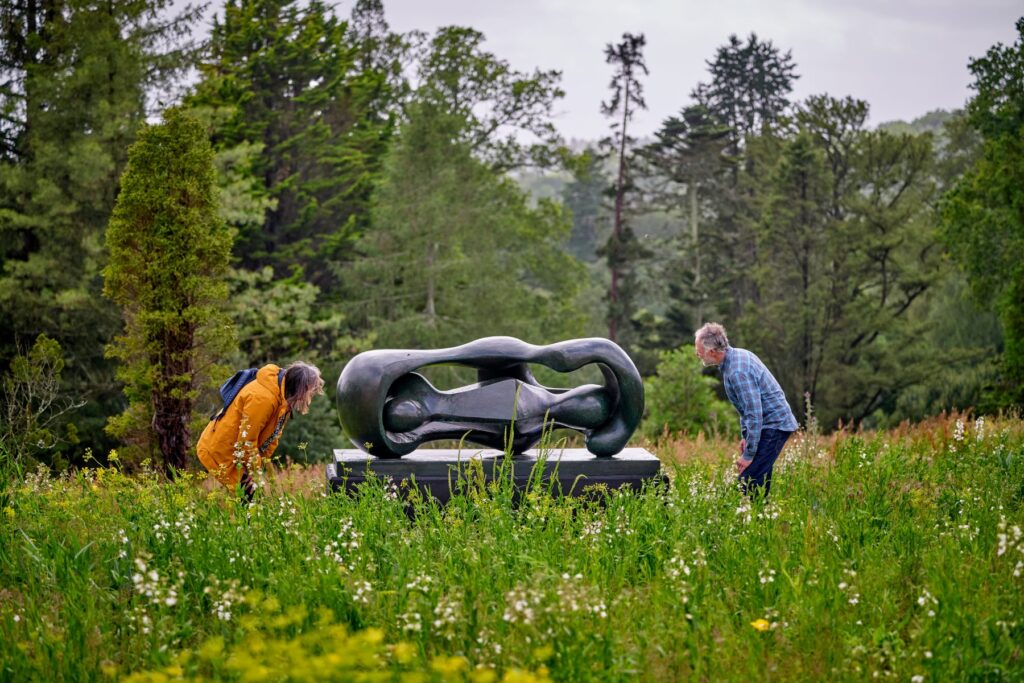
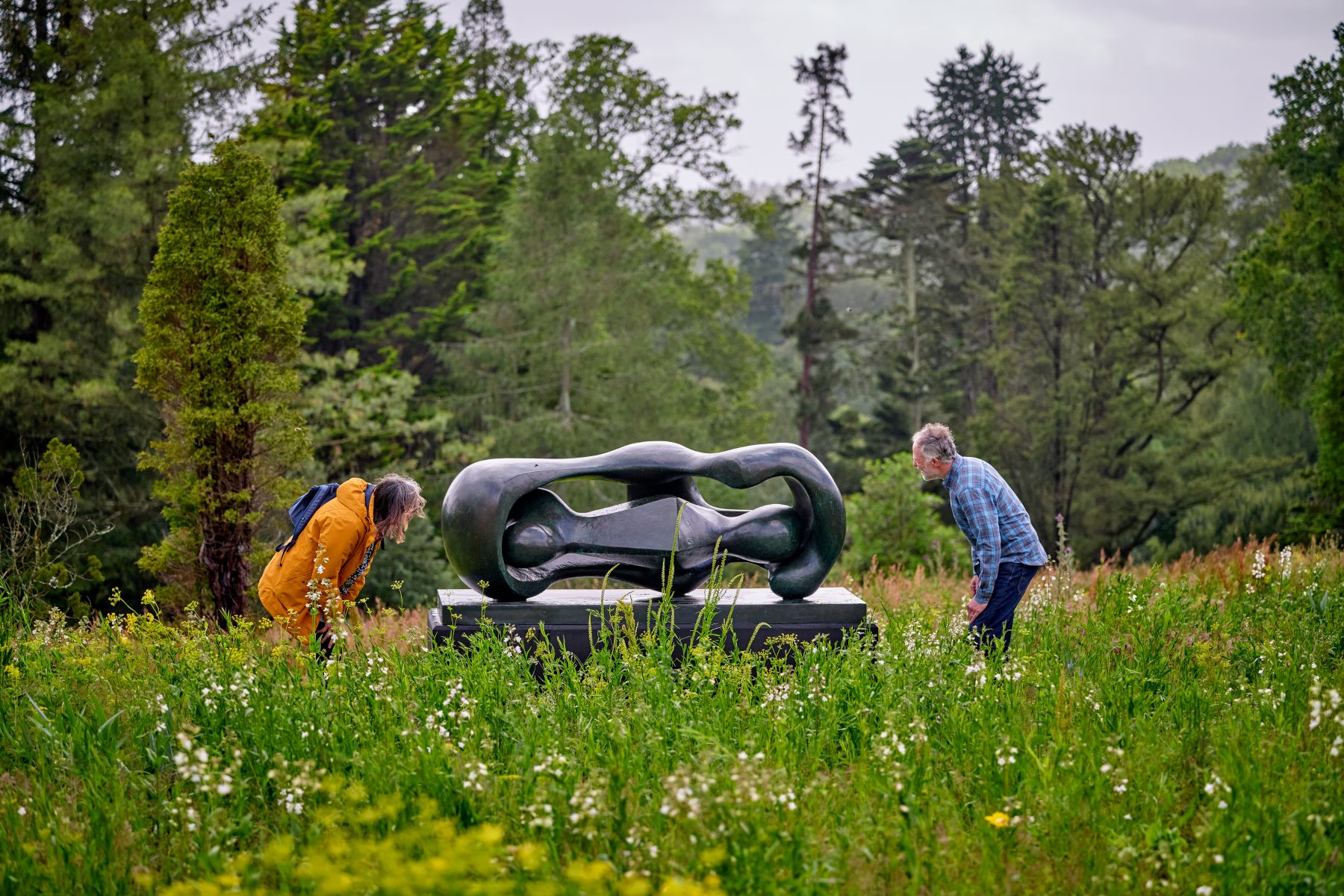
Henry Moore was an early champion for seeing sculpture in the open air, where natural light and landscape could become part of the experience of the work. His four bronzes at Wakehurst: Reclining Figure (1982); Mother and Child: Block Seat (1983–84); Relief No. 1 (1959); and Reclining Connected Forms (1969) are continually recontextualised as the landscape moves from the rich colours of autumn and the cooler hues of winter through to the bright tones of spring.
For Bangladesh-born, London-based artist Rana Begum RA, weather is part of the work itself. Her 14-metre site-specific commission, No.1604 Mesh, plays with perception as it blends and contrasts with its natural surrounds when viewed from different angles across the seasons. Constructed using timber from fallen Wakehurst trees and industrial fencing, the zig-zag piece explores the tension between the man-made and the natural. Visitors can trace the colour palette that inspired Begum’s piece through the year, from the golden amber of autumn to the vivid bark of the Dogwood (Cornus alba ‘Sibirica’) that flourishes in Wakehurst’s Winter Garden.
In Horizontals, Rafael Pérez Evans gives new purpose to trees lost to Ash dieback at Wakehurst. Carefully carved into six wooden beds, the sculptures invite visitors to lie down amidst the UK’s official National Nothofagus Collection of southern beech trees and experience the landscape from a different perspective. Inspired by Pérez Evans’ personal experience of lying beneath a tree at Wakehurst, the work creates space to stop, rest and dwell on seasonal changes in the canopy, light, temperature, scent and more. Forming a radical statement in a world that seeks constant stimulation, Horizontals seeks to create time for relief and reconnection.
In the Mansion gardens, three bronze figures from Paloma Varga Weisz’s Wilde Leute series, shown in the UK for the first time, bring a different dialogue with each season. As autumn’s bronze hues flush through the Acers (Acer palmatum) visitors can enjoy the reflected glory of both sculptures and nature across the Mansion Pond. The solid bronze sculptures remain constant whilst the living landscape changes around them, drawing attention to nature’s continual cycle of growth, decay and renewal.
Eva Owen, Programme Manager at Kew Wakehurst says, “One of the joys of Henry Moore and more is that the exhibition is continually being reframed by the natural world around it. In our living gallery, each season offers an opportunity to discover new viewpoints. We hope visitors will return, slow down and discover how the vivid colours and softer light of autumn followed by the more exposed backdrop of winter bring new dimension to each of the sculptures.”
Sebastiano Bassi, Head of Henry Moore Collections & Programmes at the Henry Moore Foundation says, “Showing sculpture outdoors is never simply a case of finding space. The landscape becomes part of the curatorial conversation. Moore understood the profound importance of the relationship between a work and its surroundings, and how they change over time. At Wakehurst, the placement of each work has been shaped by careful consideration of the landscape itself and the contemporary artists each bring a fascinating new perspective to that conversation.”
Henry Moore and more runs at Kew Wakehurst until 23 May 2027 and is included in garden entry and free for Kew and Wakehurst Members. Visitors can also enjoy a landmark exhibition of Moore’s work across Kew Gardens – Henry Moore: Monumental Nature is open daily and runs to 31 January 2027.
Image: Henry Moore, Reclining Connected Forms, 1969 © Henry Moore Foundation, Photo: Jim Holden