- Nature Unlocked launched in 2021, transforming the landscape into a living laboratory
- Early results reveal pollinator numbers in Sussex and wildlife behaviour in response to climate
- Wakehurst Ecosystem Observatory is open for collaborative studies
- New studies announced looking at wind resilience of trees, wildlife diversity and nature connectedness
On World Biodiversity Day, 22 May, Kew Wakehurst is celebrating five years of Nature Unlocked, the pioneering research programme that uses the site’s diverse habitats as a living laboratory to harness the power of UK landscapes in the face of climate change, as every living thing depends on plants and fungi. Since launching in 2021, Nature Unlocked has generated crucial scientific data to understand how nature can help solve environmental and social issues, from biodiversity loss to mental health crises. Now, scientists are scaling up the studies and creating a network of regional living laboratories that protect biodiversity and strengthen the natural systems we all depend on.
Susan Raikes, Director of Kew Wakehurst commented: “Nature Unlocked has truly transformed Wakehurst into a botanic garden with a purpose, positioning the site as a national centre for biodiversity research and innovation alongside Kew’s Millennium Seed Bank, the world’s largest store of wild seeds. Through Nature Unlocked, we’re getting closer to our landscapes than ever before, and the closer we get to nature, the more we understand our place in the world, and the more we can help everyone understand why nature needs protecting.”
A landscape shaped by science
The gardens have become a national hub for pollinator research, through the Trees for Bees citizen science trail and the use of innovative methods in bee nesting site creation to establish a baseline of Wakehurst’s pollinator population and where they are foraging. Scientists have also been getting closer to wildlife through a novel bioacoustics project harnessing sound in the trees to measure bee abundance, plus a two-month winter bioacoustics pilot that measured bird diversity and behaviour. After half a decade measuring landscapes from soil to sky, high-tech equipment such as LiDAR scanners and drones have developed an understanding of how carbon moves across habitats, and the role of native and non-native trees in sequestering carbon. Nature Connectedness research with adults and children has added the ‘people layer’, revealing how different habitats and sensory experiences shape our emotional responses to the natural world.
During its pilot phase (2021 to 2025), Nature Unlocked delivered more than 20 research projects, with initial findings including:
- 2,100 insect counts across Wakehurst revealing 110 species of bee and 90 species of moth in the gardens
- Results from gas flux monitors, measuring carbon dioxide released from soil, revealed wet woodlands are great carbon sinks
- Wakehurst’s living collection holds around 17,700 tonnes of Above Ground Biomass (AGB), equating to over 8,000 t of carbon
- Two-month wildlife bioacoustics pilot revealed:
- 32,018 minutes of wildlife recordings detecting 99 unique species
- First detections of dawn chorus species were around half an hour later on rainier mornings
- 2,000 detections of the Marsh Tit, red-listed in the UK, and 321 detections of the rare Northern Goshawk
- Nature Connectedness wellbeing research:
- Pilot studies with 1,200 school children revealed the highest nature connection in meadows
- Following surveys with schools. 96% of pupils felt a greater importance in looking after nature, following their visit
- 95% of teachers strongly agree or agree that following visit to Wakehurst feel more confident to nature and connect pupils to nature
The next chapter: opening the landscape
Leading the next phase of Nature Unlocked is the launch of the Wakehurst Ecosystem Observatory (WEO), a network of research plots which open up rich habitats for external researchers and collaborators. WEO currently comprises twenty-three 0.25-hectare plots across eight habitats, from broadleaf and coppiced woodland to unimproved grassland, managed formal gardens and woodlands impacted by ash dieback. Each plot is equipped with continuous monitoring equipment, including bioacoustics monitors and soil moisture probes – creating a unique time series openly available for research.
WEO gives researchers the opportunity to work with a living system under continuous study, joining a community working to close critical data gaps and advance the next generation of environmental monitoring. Welcoming researchers from universities, NGOs or government bodies, WEO is open to co-develop projects that generate high-impact, policy-relevant evidence. Wakehurst has developed research partnerships with Weald to Waves, Environment Bank and the National Trust to expand the scale of research in 2026, with standardised monitoring plots being set up across Sussex, to use collaborative methods and ensure evidence is relevant to land managers over the long term.
Dr Phil Wilkes, Nature Unlocked Research Lead, commented: “The establishment of the Wakehurst Ecosystem Observatory, together with the launch of our new research projects, marks a significant new chapter for Nature Unlocked. We’re bringing together research across various disciplines to really put our landscapes under the microscope, deepening our understanding of ecosystem processes and the diverse services they provide. I’m excited to see what the next five years bring as we continue to expand our research portfolio and generate the robust evidence needed to inform resilient land management and environmental policy.”
New research project looks at impact of storms on woodlands
Wakehurst is embarking on a brand-new collaborative study in partnership with Forest Research and funded by Defra through the Centre for Forest Protection, investigating the wind resilience of broadleaf woodlands. The study is expected to take place over one year and will include the installation of two masts equipped with sonic anemometers and around 50 strain gauges mounted on individual trees. These will measure wind speed in woodlands at Wakehurst and tree response to wind loading, to estimate vulnerability to wind damage. Marking a new step for Nature Unlocked, this project will span multiple themes to build evidence for future-proofed planting, with the first measuring the physical impact of storms in UK native treescapes and exploring how risks can be mitigated when developing closer-to-nature woodland management systems.
To supplement this landscape study, Wakehurst scientists are co-designing two workshops and a trail with the Forest Research team, aimed at exploring a multi-generational understanding of climate change and wind risk, and how this may impact treescapes in the future. The team will be exploring people’s relationships with and connection to trees, reflecting on memories of the 1987 Great Storm and looking at how increasing storms may translate to eco-anxiety in children, but also how they stimulate regeneration of landscapes.
The sessions will include interviews and sensory walks, as well as opportunities to notice and record the wind in the trees, and meet the scientists involved. Through this multi-faceted approach, Wakehurst hopes to create learning resources and a wind in the trees soundscape as a lasting legacy from the project. The sessions will be co-developed by Wakehurst’s Nature Connectedness lead and Forest Research social scientists, drawing on research so far to inform how best to engage the public and other stakeholders.
As climate change continues to alter global wind patterns, it is vital that resilient landscapes are developed to protect infrastructure and wildlife. By incorporating an understanding of how people connect to trees, scientists will explore the impact that changing treescapes might have in the future.
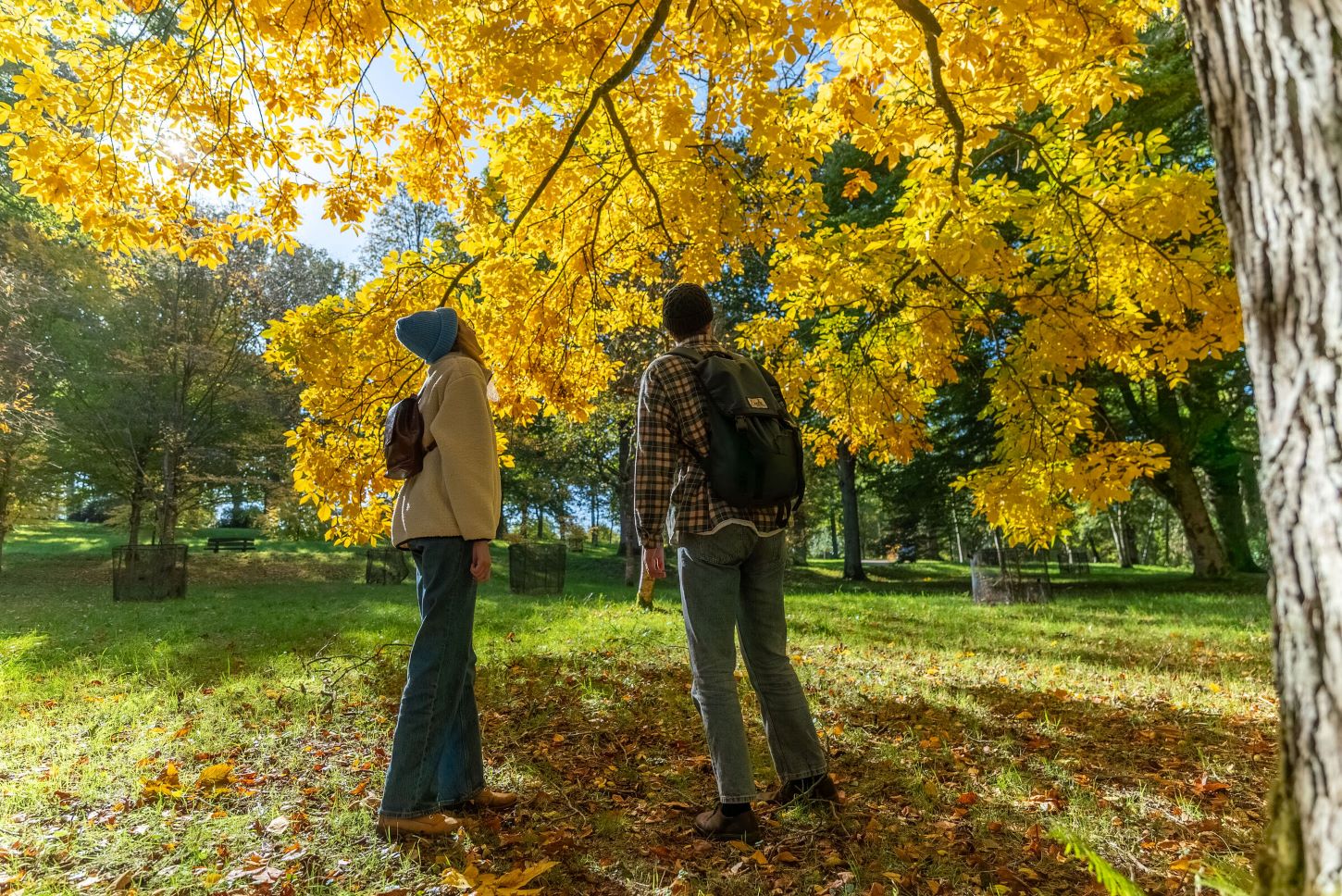
Image: Nature Connectedness Wellbeing Walks, Visual Air © RBG Kew