Four Henry Moore sculptures arrive at Wakehurst this summer
- Bold and imaginative contemporary commissions explore themes of conservation and connection with the natural world.
- Organised in partnership with the Henry Moore Institute and the Henry Moore Foundation
- Experience iconic sculptures at both Wakehurst and Kew
- Tickets available from £1 for Universal Credit recipients, £9.25 ticket for 17-25 year-olds
From 5 June 2026 to 23 May 2027, Wakehurst, Kew’s wild botanic garden in Sussex will host, Henry Moore and more, a unique outdoor exhibition in which four of Moore’s iconic sculptures are displayed alongside three exciting contemporary commissions from acclaimed artists: Rana Begum, Rafael Pérez Evans, and Paloma Varga Weisz. This is the first time that Wakehurst has collaborated with sister site, Kew Gardens, on a major arts exhibition.
Two of the contemporary artists – Rana Begum and Rafael Pérez Evans – are showing newly commissioned works for the first time ever at Wakehurst.
Rana Begum’s site-specific sculpture combines industrial fencing with wooden logs, selected from fallen trees on-site. Arranged in a zigzag formation and bolted into timber blocks, the structure follows and accentuates the natural slopes of Wakehurst’s landscape and uses colour and form to explore the tensions between the man-made and the natural, architecture and landscape, permanence and transience.
Rafael Pérez Evans’ work, ‘Horizontals 2026’, made on site at Wakehurst, is a series of participatory wooden sculptural forms, carved from timber, located within the Wakehurst landscape. Shaped into humble horizontal platforms, each piece is slightly slanted to cradle a single person. The forms emerge from the trunk through the lightest of cuts, pared back to what is necessary for rest. ‘Horizontals’ was inspired partly by Henry Moore’s reclining figures, and by the wisdom of a tired body that needs to stop, lie down horizontally, like a fallen tree, and pause to look up and contemplate the sky and the stars above.
Paloma Varga Weisz is showing a group of three recent sculptures – anthropomorphic figures from her characterful and evocative, folklore-inspired, ‘Wilde Leute’ (wild people) series. In medieval times, ‘Wild people’ were considered symbolic of the primitive state of man, without social constraints, and in harmony with nature. Paloma began developing the series in 1998 as a collection of small ceramic sculptures, which she later revisited in various sizes and materials such as wood, glass, and in this case, bronze. The three sculptures going on show at Wakehurst have never been exhibited before in the UK.
Set within the open landscape, the permanence of bronze contrasts with the mutability of nature, creating a dialogue between transience and stability, individuality and community, past and present.
Henry Moore and more will explore the connection between art and nature. The four Henry Moore works loaned to Wakehurst for this exhibition have been chosen in collaboration with the Henry Moore Foundation, in Hertfordshire, while the contemporary artists, whose works will also be on show outdoors, have been commissioned in partnership with the Henry Moore Institute, in Leeds.
Henry Moore and more will explore the connection between art and nature. The four Henry Moore works loaned to Wakehurst have been curated by the Henry Moore Foundation. The contemporary artists, whose works will also be shown outdoors, have been selected in collaboration with the Henry Moore Institute in Leeds. The Henry Moore Institute is the renowned centre for sculpture studies based in Leeds — the city where Moore himself first trained as an artist at the Leeds School of Art.
Fresh perspectives on Moore’s iconic works
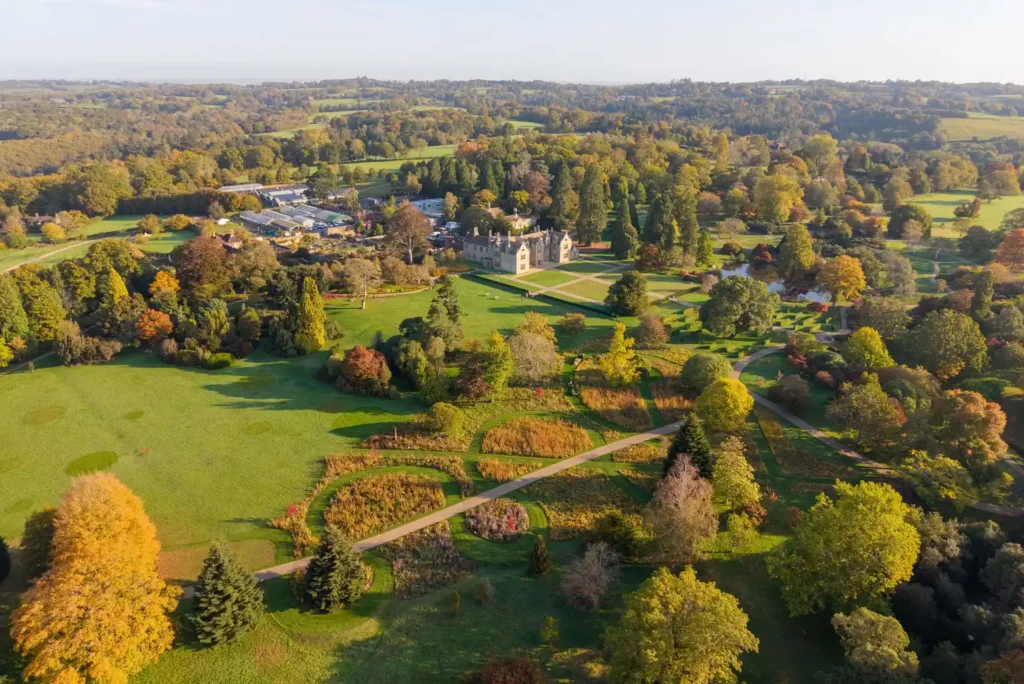
Wakehurst’s topography, within the beautiful and inspiring High Weald National Landscape in Sussex, will provide a colourful seasonal backdrop for the artworks throughout the year. Henry Moore works on display at Wakehurst will be Reclining figure (1982), Mother and child Block Seat (1983-4), Relief No. 1 (1959) and Reclining Connected Forms (1969). Henry Moore and more will celebrate Moore’s profound connection to the natural forms of the English countryside, creating a unique interplay between his sculptures and the surrounding landscape. In turn, visitors will be encouraged to reflect on the theme of connecting to nature and how they perceive and interact with the natural world.
Henry Moore: Monumental Nature, exhibition opens 9 May at Kew Gardens. This will be the largest and most comprehensive outdoor showcase of Moore’s work to date, featuring 30 works across Kew’s landscape and inside the iconic Temperate House, the largest surviving Victorian glasshouse in the world. A dedicated exhibition in the Shirley Sherwood Gallery of Botanical Art will also feature over 90 rarely seen works, exploring Moore’s unique process of ‘thinking through nature’.
Contemporary responses from innovative artists
Each contemporary work will take a distinctively contrasting approach in their response to the Wakehurst landscape and the vital science and research being undertaken to protect, conserve, and restore nature. The common inspirational thread running throughout each work, as with Henry Moore’s sculptures, will be the human craving for a connection with nature and the natural world. These works will invite visitors to enjoy the sensory experience of viewing art in novel ways and from different perspectives, within nature, set against the context of Wakehurst’s remarkable landscape.
Susan Raikes, Director of Wakehurst, says: “We’re thrilled to present, for the first time at Wakehurst, four of Moore’s iconic sculptures as part of Henry Moore and more. Partnering with the Henry Moore Institute to commission and exhibit new contemporary works from leading artists gives us a unique way to link Moore’s enduring themes—his deep care for and connection with the natural environment—to today’s most exciting artistic voices.
“Our contemporary artists have also taken inspiration from Wakehurst as a living laboratory and the vital science and research that takes place through our pioneering Nature Unlocked programme, in addition to our globally important Millennium Seed Bank. Both embody our mission to care for, and conserve, the natural world.”
Image: Reclining Figure 1982. Photo Michael Phipps