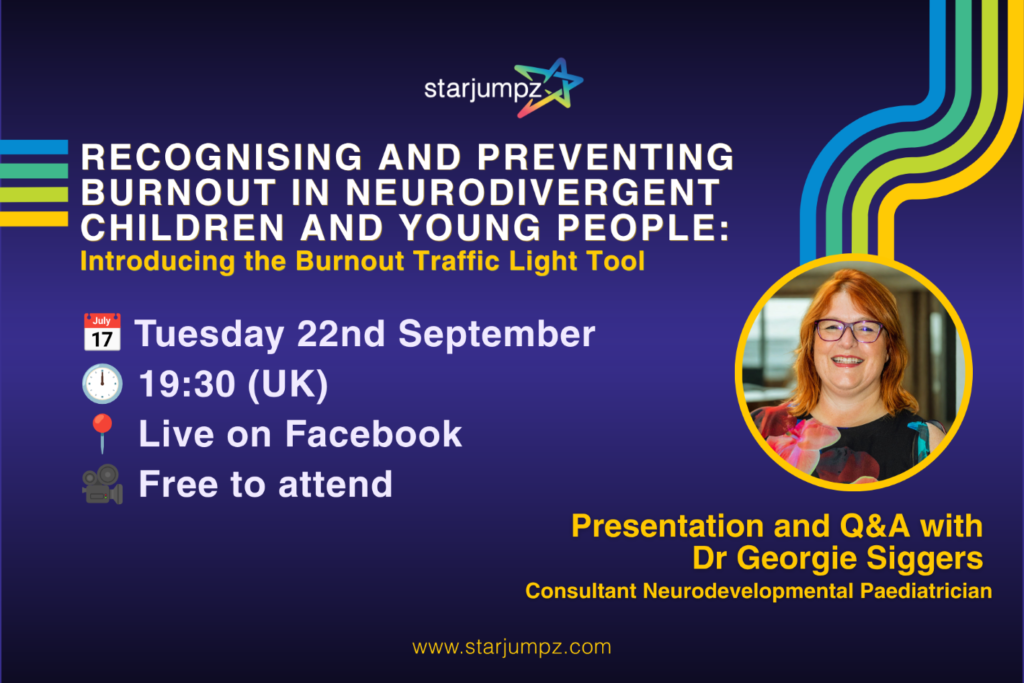
Recognising and Preventing Burnout in Neurodivergent Children and Young People: Introducing the Burnout Traffic Light Tool
FREE WEBINAR AND Q&A
Autistic burnout is increasingly recognised as a significant challenge affecting many neurodivergent children and young people. Yet burnout is often only identified once a child’s functioning, wellbeing and participation in everyday life have already declined substantially.
In this practical session, Dr Georgie Siggers explores why some children appear particularly vulnerable to burnout and how cumulative stress, masking, sensory and emotional overload, executive functioning demands, unmet needs and co-occurring conditions can gradually erode resilience over time.
Drawing on extensive clinical experience, Dr Georgie Siggers will introduce her Burnout Traffic Light Tool – a practical framework designed to help families and professionals recognise early warning signs, respond appropriately at different stages of burnout and reduce progression to crisis. The session will also explore practical strategies to support recovery, pacing and long-term prevention.
Attendees will gain a greater understanding of neurodevelopmental burnout together with a practical, evidence-informed framework that can be applied across home, education and healthcare settings to improve outcomes for children and young people.
About Dr Siggers:
Dr Georgie Siggers BSc (Hons), MBBS, MRCP, FRCPCH is a Consultant Neurodevelopmental Paediatrician with over 25 years of experience working with children, young people and families. She specialises in autism, ADHD, complex developmental presentations and comprehensive neurodevelopmental assessment. She has now assessed over 650 children who have presented with symptoms indicative of burnout.
A highly respected clinician, lecturer and trainer, Dr Siggers has particular expertise in complex and overlapping presentations, including dual diagnoses, masking, demand avoidance profiles and differential diagnosis throughout childhood and adolescence. She is passionate about improving understanding of neurodevelopmental differences and helping professionals and families identify effective, evidence-informed approaches that support children and young people to thrive.
By understanding burnout before it reaches crisis point, we can create environments that better recognise, respect and support neurodivergent needs. Join us to gain practical strategies that can make a meaningful difference in the lives of children, young people and the adults who support them.