For women who wear the hijab, it is one of the few pieces of clothing worn from the moment they leave the house until the moment they get home. That might mean the school run, a full day at work, an afternoon at the park and a supermarket shop on the way back. A hijab that looks lovely at eight in the morning but itches, slips or overheats by lunchtime is not much use.
Comfort comes down to a handful of choices you make before you buy. Here is what to look for.
Breathability Comes First
A hijab sits over the head, ears and neck for hours, so how well the fabric lets air through matters more than almost anything else. Soft, breathable fabrics stay pleasant for longer, especially indoors with the heating on or on a warm day out with the children.
Fibres such as modal, cotton and jersey blends tend to feel lighter against the skin than heavy, tightly woven synthetics, which can trap warmth. If you run hot, or you are on your feet all day, start there.
Softness Against the Skin
Because a hijab frames the face and rests on the neck, the feel of the fabric is noticeable all day long. Rough or stiff scarves can rub along the jawline and the back of the neck. When you shop, it is worth judging a hijab the way you would a jumper for a child with sensitive skin: if it feels scratchy in your hand, it will feel worse by mid-afternoon.
Smooth, soft fabrics also crease less where they fold under the chin, so they still look neat at the end of a long day.
Size and Coverage
Most everyday hijabs are rectangular, and size makes a real difference to comfort. A scarf that is too short pulls when you turn your head; one that is too long becomes bulky and warm. Around 180cm long and 70cm wide is a comfortable everyday size for most women, with wider scarves suiting those who prefer more coverage over the chest.
Opacity and the Role of an Under Cap
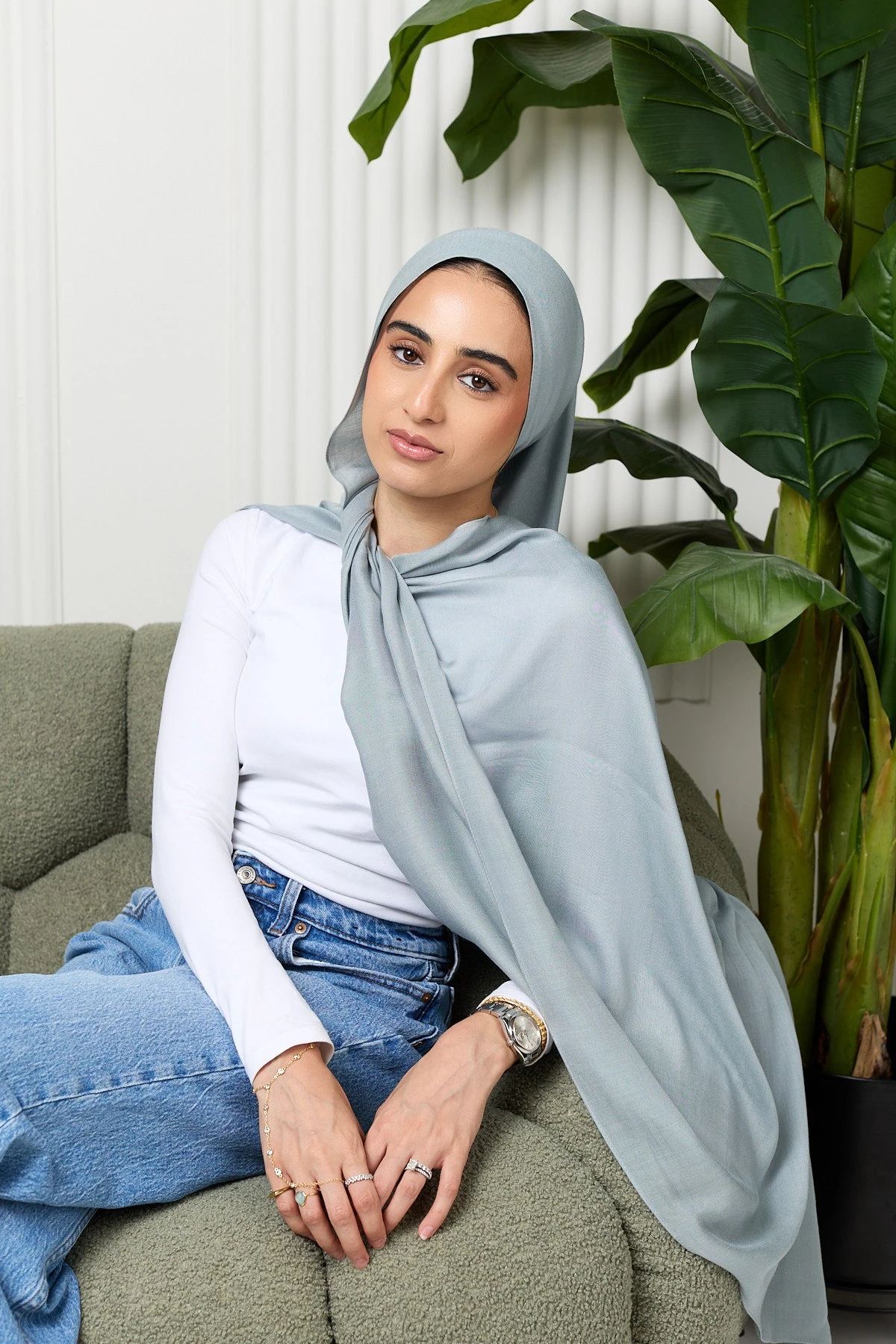
Many of the softest, most breathable fabrics are also fine, which means they can be semi-transparent. That is not a reason to avoid them; it is a reason to pair them with an under cap. A good under cap keeps hair neat, adds coverage and gives the scarf something to hold on to, so you spend less time adjusting it.
Some brands sell the two together, which makes life simpler. The modal hijab with under cap by Alkareem is one example: the brand describes it as 100% modal and semi-transparent, sized at 180cm by 70cm, and sold with a matching jersey under cap for full coverage.
Grip Without the Fuss
Slippery fabrics need more pins and more checking in the mirror. Matte fabrics with a little texture or stretch tend to stay where you put them, which is what you want when you are carrying shopping or chasing a toddler. Fewer pins also means fewer to lose, and less chance of one catching on a coat or a child’s jumper.
Colours That Work Hard
Comfort is partly about not having to think. A small set of easy colours, such as black, navy, grey, beige and mocha, goes with almost everything in a family wardrobe and saves decisions on busy mornings. Add a few favourite shades for weekends and special occasions, and you have a collection that covers most days without a second thought.
Easy Care
A hijab worn daily needs washing often, so check the care label before you buy. Some fabrics are happy in the machine; others last longer when washed by hand. The brand recommends hand washing its modal hijab, for instance, to preserve the fabric’s texture. Storing scarves folded or rolled, rather than hung, also helps soft fabrics keep their shape.
The most comfortable hijab is the one you forget you are wearing. Choose for breathability, softness and fit first, and the rest follows. For more guides on fabrics and everyday modest wear, Alkareem London’s website has a journal of practical advice.
Image: Alkareem London