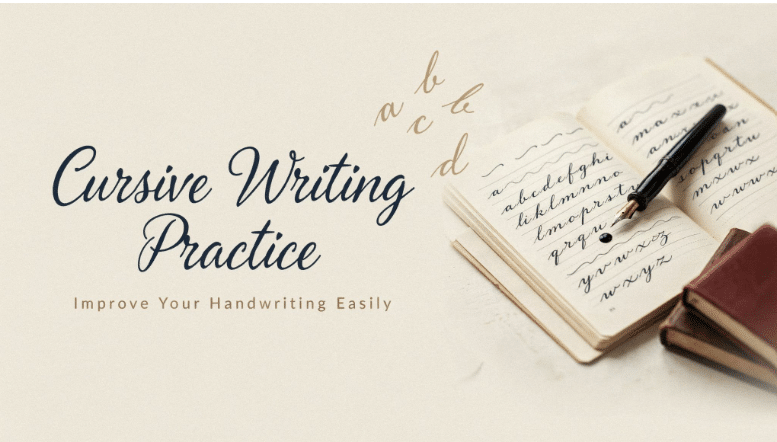
Cursive writing is a beautiful and flowing style of handwriting where letters are connected smoothly without lifting the pen frequently. It not only improves the appearance of your writing but also increases writing speed and control. Many students and adults want to improve their handwriting, and cursive writing practice is one of the most effective ways to achieve this goal. With regular practice, proper techniques, and patience, anyone can develop neat, clear, and confident cursive handwriting.
Whether you are a beginner or someone looking to refine your skills, learning cursive writing step by step makes the process easier and more enjoyable.
What is Cursive Writing?
Cursive writing is a handwriting style in which letters are joined together in a continuous flow. Unlike print writing, where each letter is separate, cursive writing connects letters with smooth strokes. This creates faster writing and gives the text a more elegant and natural look.
Cursive writing focuses on rhythm, consistency, and smooth hand movement. Once mastered, it allows you to write quickly while maintaining readability and neatness. It is commonly taught in schools and is also useful for signatures, note-taking, and personal writing.
Step-by-Step Guide to Master Cursive Writing

Now, let’s go through the step-by-step process of learning cursive writing. By following the simple steps below, along with practicing cursive worksheets, you can gradually improve your handwriting and develop smooth, consistent cursive skills.
Master Cursive Alphabets
Mastering the cursive alphabet is the first step in learning cursive writing. Use Cursive Alphabet A to Z worksheets to practice each letter, focusing on proper formation, smooth loops and curves, and the natural connections between letters.
Start practicing lowercase cursive letters, as they are easier and used more frequently. Practice each letter slowly, paying close attention to proper formation, smooth curves, loops, and natural connections between letters.
After mastering lowercase, move to uppercase letters. While they can be slightly more complex, they follow similar patterns. Practice them one by one, focusing on neatness and consistency. Take your time to learn each letter properly rather than rushing through the process.
Practice Joining Letters
Connecting letters smoothly is the key feature of cursive writing. Once you are comfortable with individual letters, start practicing letter combinations. Practice joining letters slowly and smoothly without lifting your pen unnecessarily. This helps improve writing flow and rhythm.
Practice Cursive Words
After learning letter connections, move on to practicing full words. Start with simple and short words such as: Cat, dog, pen, book, school. Then gradually practice longer words. Writing words improves your confidence and helps you apply what you learned.
Practice Writing Sentences
Once you are comfortable with words, start writing complete sentences. This improves consistency, spacing, and overall handwriting quality. Sentence practice helps train your hand for continuous writing. Example sentences for practice:
- I practice cursive writing daily.
- Good handwriting improves presentation.
- Practice makes handwriting better.
Tips to Improve Handwriting Easily

Following proper techniques makes cursive writing practice more effective. Cursive writing worksheets help you develop correct letter formation, smooth connections, and better hand control. Using the right methods also prevents bad writing habits and ensures steady, long-term improvement in your handwriting quality.
Use the Correct Pen Grip
Hold your pen comfortably without gripping too tightly. A relaxed grip allows smooth movement. This reduces hand fatigue and gives you better control over letter formation. Proper grip also helps maintain consistent pressure while writing.
Maintain Proper Posture
Sit upright with your feet flat on the floor. Good posture improves hand control. Keep your notebook at a comfortable angle to allow natural hand movement. Proper posture prevents strain and helps you write more smoothly.
Write Slowly at First
Focus on correct letter formation instead of speed. Speed improves with practice. Writing slowly helps your hand learn the correct shapes and connections. Once accuracy improves, your writing speed will increase naturally.
Maintain Consistent Letter Size
Keep letters uniform in size for neat and balanced handwriting. Consistent letter size improves readability and overall appearance. It also helps develop better writing discipline and visual consistency.
Practice Regularly
Consistency is the key to improvement. Even small daily practice makes a big difference. Regular practice builds muscle memory and improves control over time. Just 10–15 minutes of daily practice can lead to noticeable results.
Conclusion
Cursive writing practice is one of the best ways to improve handwriting easily and effectively. It helps increase writing speed, improves hand coordination, and makes handwriting more neat and professional. By learning basic strokes, practicing letters, joining words, and writing sentences regularly, anyone can develop beautiful cursive handwriting.
Consistency, patience, and proper technique are the keys to success. With daily practice and the right approach, you can transform your handwriting and build confidence in your writing skills. Start practicing today, and you will see steady improvement over time.