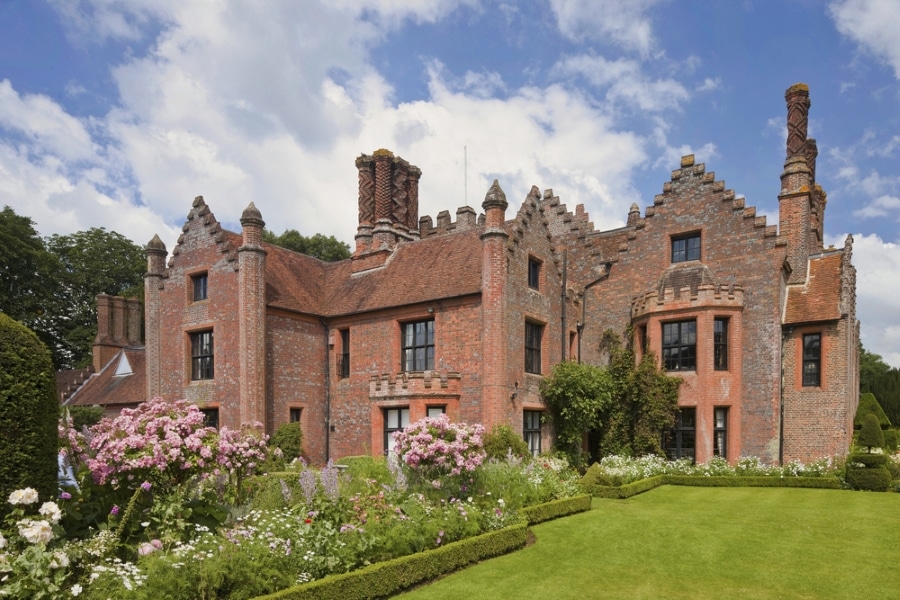
Somebody has to click the button. When a family books a group holiday in a large house together, one person puts their name and card details on a contract for the full amount, and everyone else pays them back. That person is legally liable for the lot, including the cancellation charges if a household drops out in March.
It’s worth knowing that before you volunteer, because the multi-generational holiday, everyone from grandparents to toddlers under one roof for a week, has become the default way extended families see each other properly. It works wonderfully. It also runs on a set of assumptions that nobody checks until they arrive.
“Sleeps fourteen” is a marketing number
The headline figure on a listing counts every sleeping surface in the building. That will often include bunk rooms, sofa beds and a folding z-bed in a box room with no window.
Ask the owner for a bed-by-bed breakdown before you book: how many doubles, how many twins, how many are actually bunks, and which rooms have en suites. A house advertised for fourteen might have five proper double rooms and a bunk room for four, which is fine if you’re bringing children and awkward if you’re bringing three adult couples and a set of in-laws.
The same applies to the dining table. Plenty of properties sleep twelve and seat eight, which means somebody eats standing at the worktop every night. If sitting down together is the point of the holiday, and for most families it is, check the dining photographs properly or ask outright.
Bathrooms decide the mood of your group holiday
The single number that determines whether a week goes smoothly is the ratio of bathrooms to people.
Twelve guests sharing two bathrooms produces a morning queue and, by about half past eight, a teenager who has used all the hot water. One bathroom per three or four guests and nobody notices there was ever an issue. Below that and you’ll be running a rota by Tuesday.
Related, and consistently underestimated: people need somewhere to not be. Ten relatives who genuinely enjoy each other’s company still cannot spend seven days in a single open-plan room. A second sitting room, a snug, a conservatory, even a garden with proper seating, does more for family peace than a hot tub. Games rooms earn their keep for the same reason, mostly by absorbing the ten to fifteen age group somewhere that isn’t the adults’ space.
Think about the oldest and youngest guests first
Older relatives do much better with a ground floor bedroom and a bathroom on the same level, which matters more than it sounds in converted barns and period cottages where staircases can be steep and unevenly spaced. Some properties have one. Far fewer say so clearly. It’s a question worth asking every time.
At the other end, ask what’s actually in the house rather than what’s listed. Travel cots, high chairs, stair gates and blackout blinds are all commonly advertised and the condition varies enormously. Discovering the cot is a broken frame in a cupboard at ten at night is a specific kind of misery. Make sure you know what isn’t included, so that you can pack the essentials.
Parking, signal and the practical stuff
Six households means five or six cars. A remote farmhouse with a gravel turning circle may have space for three, and the alternative is a verge half a mile away.
Mobile signal is worth checking too if anyone in the group is working part of the week or if you’re relying on maps to find the place. Rural properties in Wales, the Lakes and parts of Cornwall can have none at all, and the wifi in a stone-walled building is often confined to one corner of the kitchen.
Ask about the damage deposit as well. On larger properties these are routinely several hundred pounds, occasionally more, held separately and returned after inspection. It’s not a problem, but it’s a sum the lead booker fronts on top of everything else.
The money conversation, had early
Splitting a house evenly between households seems fair until you notice a family of five is paying the same as a couple. Splitting per head feels fairer but charges full whack for a baby. There’s no arrangement that satisfies everyone, so choose one, say it out loud before anybody commits, and put it in writing. Per adult with children at half is a reasonable compromise.
Do the same for food. One shared kitty managed by one person beats fourteen supermarket receipts and a spreadsheet on the final morning. And build in a takeaway night and a meal out, because cooking for fourteen stops being enjoyable on day two, usually for the same two people who volunteered on day one. Some larger properties can arrange a private chef for an evening, which sounds indulgent and frequently costs less per head than taking the whole group out once you’ve counted drinks and taxis.
Book earlier than feels reasonable
There are only so many houses in the country that sleep sixteen. School holidays, Christmas and the August bank holiday go a year or more ahead, and if you’re coordinating six households’ annual leave you’re realistically looking at booking twelve to eighteen months out for peak weeks.
Off-peak is another matter entirely. Late September, early November and the weeks either side of half term often have both availability and noticeably lower prices which might be very welcome for a group holiday where people have different budgets.
One thing that catches families out: cancellation terms on large properties are far harsher than on ordinary holiday lets, because one cancellation costs the owner the entire week. Non-refundable deposits and a balance due eight to twelve weeks ahead are normal. Read them properly, and consider whether the group wants insurance that covers a household pulling out.
Generic rental sites will show you big houses, but they’re built around couples and small families and the filters tend to give up somewhere around eight guests. Specialist platforms are more useful because the listings are written with groups in mind and the details above are usually already there. Group Escape Houses is one, covering houses set up for larger groups across the UK, with enquiries going direct to the owner so you can ask the awkward questions before you commit.
Because the families who come home from these weeks still speaking to each other are almost always the ones who did the dull bit first: who sleeps where, who cooks when, who pays what, and who’s carrying the contract.
Image: Depositphotos