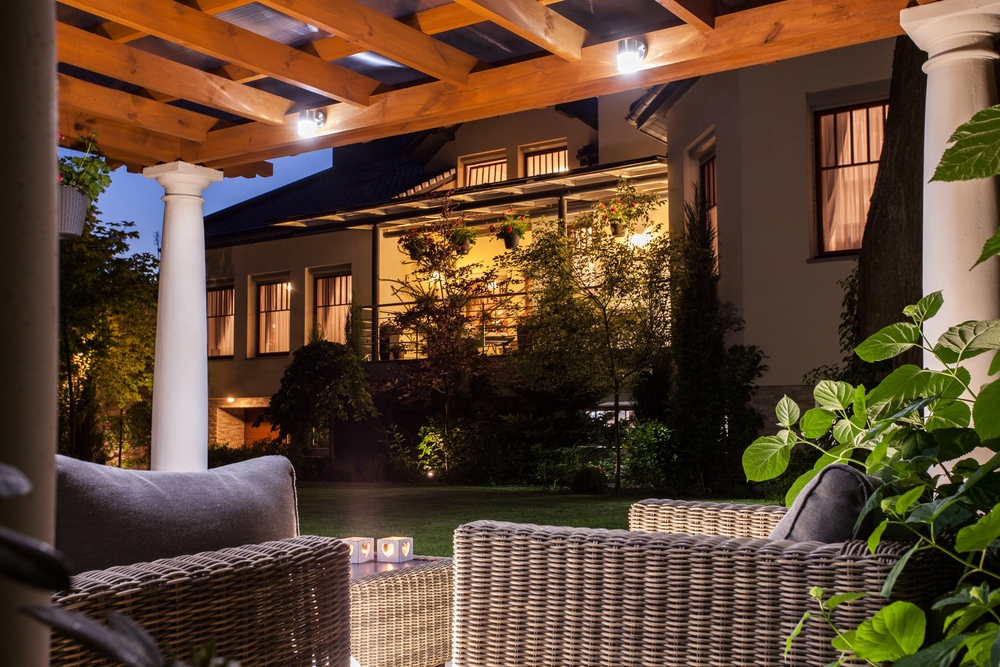
Warmer weather changes how you use your home. Suddenly the garden becomes somewhere children can actually run about, where you can eat without clearing the table first, and where, if you’re lucky, you might get five minutes to yourself with a cup of tea. You don’t need a huge plot or a professional redesign to make it work. A few sensible tweaks can go a long way.
It’s worth thinking about how the garden functions at different points in the day. Good seating, tidy paths and some outdoor lighting can make a real difference as the evenings draw in, whether the kids are still charging around or you’re finishing dinner later than planned.
Create clear areas for play and relaxation
Things tend to work better when different parts of the garden have a rough purpose. Children need space to move, and adults need somewhere to sit without a football landing in their drink. You don’t need much room, a patch of lawn for running about, a patio for eating, a corner with a chair or two for quieter moments. Furniture, planters or an outdoor rug can help carve things up without any digging involved.
If you’ve got young children, try to keep their play area visible from wherever you tend to sit. They get a bit of independence, you don’t have to hover constantly. Everyone’s happier.
Keep pathways safe and easy to use
Kids move fast, especially between the house and garden. It’s worth making sure there’s nothing in the way, stray toys, coiled hoses, pots that have migrated onto the path. Steps and uneven paving are worth checking too, particularly if they get used after dark when it’s harder to spot the dodgy bit.
Families with pushchairs, scooters or bikes benefit from having one clear route through. It sounds simple, but it makes daily life noticeably easier and means the garden actually gets used rather than avoided.
Choose practical seating
Somewhere comfortable to sit makes the whole garden more appealing. It gives you a place to be while the children play, and somewhere to eat, read or just exist at the end of the day.
For family life, practical beats pretty. You want things that wipe down easily, can be moved around and won’t collapse if a child sits on them dramatically. Benches, folding chairs, stackable seats, all perfectly good options. A storage bench is particularly handy in a smaller garden, giving you somewhere to perch while also hiding the clutter inside. A couple of cushions or a throw can make it feel considerably more comfortable without adding much maintenance.
Add shade for warmer days
A sunny garden is lovely until it isn’t. Children overheat quickly, meals become uncomfortable and nobody lasts long outside without somewhere to escape the sun. A parasol or sail shade is the simplest fix. A pergola or gazebo gives you something more permanent if that suits the space. Trees and climbing plants work well over time if you’d rather keep things natural.
For younger children, a pop-up tent or play canopy can become a proper little den, good for snacks, books or just general hiding. Put shade where it’ll actually be used: near the seating, near the play area, near wherever you end up eating.
Make outdoor storage simple
Gardens accumulate stuff. Toys, sports equipment, gardening tools, spare cushions, it all builds up. Some decent storage keeps things manageable and means you’re not spending ten minutes hunting for the ball before anyone can play, though bulkier clutter and broken equipment may eventually need proper rubbish removal in order to clear it out for good.
Boxes, baskets, a small shed, a bench with a lid, whatever fits the space. If children can reach some of the storage themselves, they’re more likely to tidy up without being asked twelve times. Storing things near where they’re used helps too: garden games by the lawn, cushions by the seating. Less faff, more time actually outside.
Use plants to make the space feel welcoming
Plants make a garden feel like a garden rather than an outdoor room. Colour, texture, a bit of life, it all adds up. For families, the key is choosing things that can handle a bit of activity without looking immediately devastated.
Lavender, rosemary, ornamental grasses, sunflowers and marigolds are all reasonably tough and easy to enjoy. Herbs, strawberries and vegetables are brilliant for involving children, something to water, check on and eventually eat. Just double-check that anything in or near play areas is safe for small hands and curious pets.
Create opportunities for outdoor activities
A garden worth spending time in needs to offer more than just space. Think about what might actually draw children outside, a chalkboard wall, a mud kitchen, a water tray, a bug hotel, a small veg patch. For older children it might be room for ball games, a reading corner or a table for crafts.
The best family gardens are flexible. The lawn might be for games in the morning, a picnic at lunch and somewhere to sprawl with books by the afternoon. Keep the layout adaptable and it’ll serve different ages and moods without needing to be rearranged constantly.
Make mealtimes easier outdoors
Eating outside is one of the genuine pleasures of a British summer, on the days when it cooperates. The main thing is making it easy enough that you’ll actually bother. Set up near the kitchen door if you can, so carrying things out isn’t an expedition. A tray or outdoor trolley helps. Keep some wipes handy and have somewhere for rubbish.
It doesn’t need to be a production. Breakfast outside, after-school snacks on the patio, a simple weekend lunch, it all counts. The point is making it feel easy rather than like extra work.
Think about evening comfort
Once the heat drops, summer evenings in the garden can be genuinely lovely. Keep a blanket or two within reach, make sure seating is comfortable and check that paths are visible. A small table for drinks or books makes the space feel more settled. If insects are an issue, lavender, mint and rosemary near the seating can help deter them.
It doesn’t have to be a big occasion, ten minutes outside before bedtime, or a quiet drink once the children are asleep, is enough.
Keep the garden realistic for family life
A family garden isn’t going to look pristine. Toys appear, plants get bumped, the lawn takes a battering. That’s what a garden that’s actually being used looks like. Safe, practical and genuinely enjoyable matters far more than perfectly tidy.
A few straightforward changes, better storage, proper seating, some shade, clearer paths, can make the garden a much more useful part of summer life. It doesn’t take a grand project. It just takes a bit of thought about how your family actually uses the space.
Image: Depositphotos